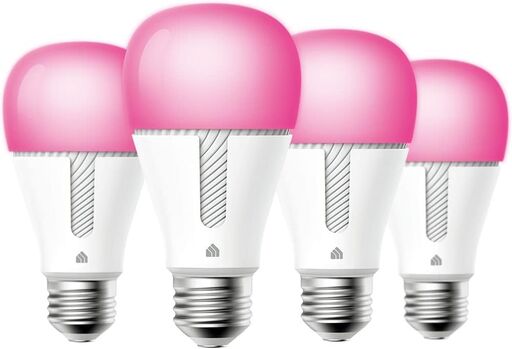
If you've ever had a smart bulb mysteriously stop working, lose its Wi-Fi connection repeatedly, or burn out far sooner than its advertised 25,000-hour lifespan, you're not alone. The culprit is often hiding in plain sight: your light fixture itself. Enclosed fixtures—those glass-covered ceiling lights, jar-style pendants, and recessed cans with trim covers—create a thermal environment that can be downright hostile to smart bulbs.
The Hidden Heat Problem in Smart Lighting
Traditional incandescent bulbs were essentially heaters that happened to produce light, with 90% of their energy converted to heat. LED bulbs, including smart variants, are far more efficient, but they're not heat-free. What makes smart bulbs particularly vulnerable is the additional electronics packed into their base: Wi-Fi or Zigbee radios, microcontrollers, voltage regulators, and driver circuits.
These components generate heat independent of the LED chips themselves, and they're far more sensitive to high temperatures than the simple filament of an old incandescent bulb. When operating temperatures exceed safe thresholds—typically around 40-50°C (104-122°F) for the electronics—you'll start seeing problems.
Why Enclosed Fixtures Are So Problematic
Open fixtures allow air to circulate freely around the bulb, carrying heat away through convection. Enclosed fixtures trap hot air around the bulb, creating a greenhouse effect that can raise ambient temperatures by 20-40°C above room temperature.
Here's what happens in an enclosed fixture:
- Stagnant air accumulates – Without airflow, hot air has nowhere to go
- Heat radiates back onto the bulb – The glass cover reflects infrared energy
- Temperatures compound over time – Extended use sessions make things progressively worse
- Thermal throttling kicks in – Smart bulbs dim themselves to prevent damage
- Component degradation accelerates – Capacitors dry out, solder joints weaken, and chips fail
The result? Your 25,000-hour smart bulb might last only 5,000 hours—or less. Worse, you might experience intermittent connectivity issues, color accuracy drift, or random resets before complete failure.
Identifying At-Risk Fixtures in Your Home
Not all enclosed fixtures are equally problematic. Here's how to assess your risk level:
High Risk (Avoid standard smart bulbs):
- Fully sealed glass globes with no ventilation holes
- Recessed cans with airtight trim (IC-rated fixtures)
- Outdoor fixtures with gaskets
- Small, compact fixtures where the bulb nearly touches the enclosure
Moderate Risk (Monitor closely):
- Semi-enclosed fixtures with small vent holes
- Large glass shades with open bottoms
- Recessed cans with open trim styles
Low Risk (Generally safe):
- Open pendant lights
- Track lighting
- Exposed bulb fixtures
- Well-ventilated bathroom vanities
Solutions: Heat-Rated Bulbs and Smart Alternatives
The good news is that you don't have to abandon smart lighting in enclosed fixtures. Several strategies can help you maintain both functionality and longevity.
Option 1: Choose Bulbs Rated for Enclosed Fixtures
Some manufacturers specifically engineer their smart bulbs for enclosed fixture use. These models feature improved thermal management—better heat sinks, higher-temperature-rated components, and more conservative driver designs that prioritize longevity over maximum brightness.
When shopping, look for explicit "enclosed fixture rated" labeling. This isn't just marketing speak—it indicates the bulb has been tested and designed to handle reduced airflow conditions. The Philips Hue line, for example, includes models with robust thermal designs that handle challenging installations better than budget alternatives.
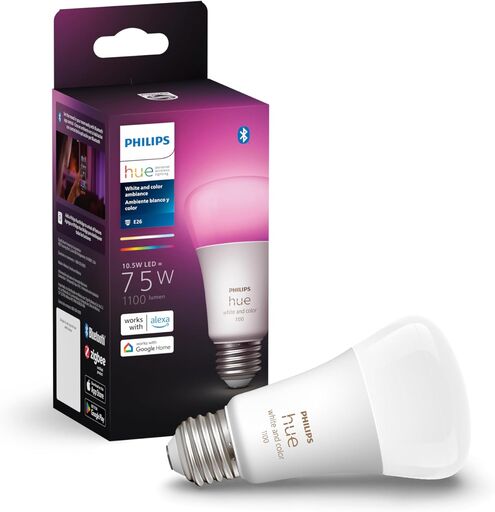
Philips Hue Smart 75W A19 LED Bulb
Option 2: Opt for Quality Brands with Better Thermal Engineering
Even when not explicitly rated for enclosed fixtures, premium smart bulbs typically use higher-quality components with wider operating temperature ranges. Brands that invest in proper thermal management will outperform budget options in demanding installations.
LIFX bulbs, for instance, pack everything—including Wi-Fi—directly into the bulb without requiring a hub, which means they've had to engineer for thermal challenges from the start. Their direct Wi-Fi architecture actually runs cooler than some hub-based alternatives because there's no constant polling traffic.
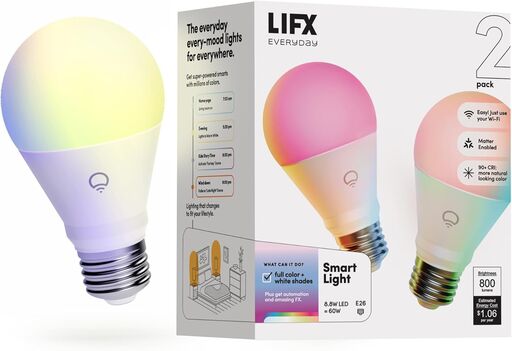
LIFX Everyday A19 Smart LED Light Bulb
Option 3: Consider Smart Recessed Downlights
For recessed lighting—one of the most problematic enclosed fixture types—a better solution might be replacing the entire fixture with an integrated smart downlight. These purpose-built units spread their electronics across a larger area and include proper heat dissipation as part of their design.
Smart downlights eliminate the retrofit bulb problem entirely. They're designed as complete systems where the LED, driver, and smart circuitry work together with optimized thermal management. Many also offer superior light distribution compared to a standard bulb in a recessed can.
Option 4: Budget-Friendly Alternatives with Caveats
If you're working with a tighter budget, some affordable smart bulbs can work in moderately enclosed fixtures—just don't expect the same longevity as premium options. The key is matching your expectations to the product's capabilities and your fixture's thermal characteristics.
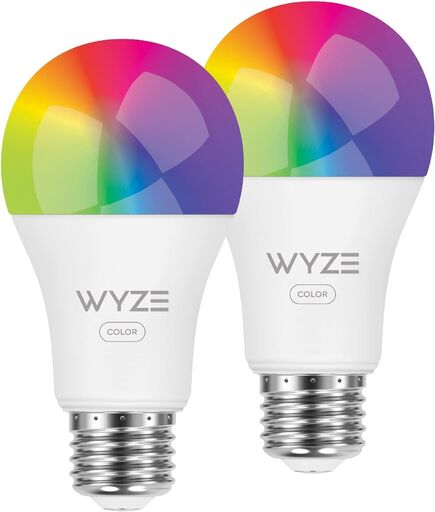
Wyze Lifestyle Bulb Color A19 (2-Pack)
Practical Tips for Extending Smart Bulb Life
Beyond choosing the right bulb, several practices can help maximize longevity in challenging fixtures:
1. Run at lower brightness – LEDs run cooler at reduced output. If you typically use 50-70% brightness, your bulb will last significantly longer than at 100%.
2. Avoid "always-on" scenarios – Give bulbs time to cool down. Automation schedules that include off periods are healthier than 24/7 operation.
3. Choose cooler color temperatures – Warm white (2700K) LEDs often run slightly cooler than daylight (5000K+) equivalents due to phosphor efficiency differences.
4. Improve fixture ventilation – Sometimes drilling small vent holes in non-visible areas of a fixture (if safe and code-compliant) can dramatically improve airflow.
5. Consider fixture replacement – If a fixture repeatedly kills bulbs, it might be more economical to replace it with a better-ventilated alternative than to keep buying new bulbs.
The Bottom Line
Smart bulb failures in enclosed fixtures aren't random bad luck—they're predictable consequences of physics. Heat is the enemy of electronics, and enclosed fixtures are heat traps. Understanding this relationship empowers you to make smarter purchasing decisions and installation choices.
For fully enclosed fixtures, invest in explicitly rated bulbs from reputable manufacturers or consider integrated smart lighting solutions. For semi-enclosed situations, quality mid-range bulbs with good thermal design can work well with some precautions. And for open fixtures, you have the full range of options available.
The upfront cost of a properly rated smart bulb might be higher, but when you factor in replacement costs, the hassle of re-pairing devices, and the frustration of unreliable automation, it's almost always the more economical choice in the long run. Your smart home is only as reliable as its weakest link—don't let that link be a overheated bulb in a glass globe.