
You've prepped your skin, applied your primer, and started blending your foundation—only to watch in horror as it separates into tiny, rubbery balls across your face. This phenomenon, known as pilling, is one of the most frustrating experiences in makeup application. But here's the thing: it's usually not your technique that's the problem. It's chemistry.
Understanding why pilling happens is the key to preventing it entirely. In most cases, the culprit is a fundamental incompatibility between the base ingredients in your skincare, primer, and foundation. Let's break down the science and give you a practical guide to achieving flawless, pill-free makeup.
The Science of Silicone vs. Water-Based Formulas
Every liquid cosmetic product has a base—the primary ingredient that carries all the other components. The two most common bases in primers and foundations are silicone and water. When these two bases meet, they don't play nicely together.
Silicone-based products contain ingredients ending in "-cone" or "-siloxane"—think dimethicone, cyclomethicone, or cyclopentasiloxane. These create that silky, blurring effect that fills in pores and fine lines.
Water-based products list water (aqua) as the first ingredient and often contain humectants like glycerin or hyaluronic acid. They tend to feel lighter and more hydrating on the skin.
When you layer a water-based product over silicone (or vice versa), the formulas can't blend together properly. Silicones are hydrophobic—they repel water. This causes the products to separate and ball up as you try to blend them, creating that characteristic pilling effect.
How to Identify Your Products' Base
The easiest way to prevent pilling is to match your products by their base formula. Here's how to decode your ingredient lists:
Signs of a silicone-based product:
- Dimethicone, cyclopentasiloxane, or similar ingredients in the first five ingredients
- Smooth, slippery texture
- Often labeled as "pore-filling" or "smoothing"
Signs of a water-based product:
- Water (aqua) is the first ingredient
- Lighter, more fluid consistency
- Often labeled as "hydrating" or "lightweight"
Some products are oil-based (containing oils like jojoba, argan, or coconut oil high in the ingredient list), which adds another layer to consider. Generally, oil-based products work better with other oil-based or silicone-based formulas than with water-based ones.
The Golden Rule: Match Your Bases
Here's the simple principle that will save your makeup routine:
- Silicone primer + Silicone foundation = ✓
- Water primer + Water foundation = ✓
- Silicone primer + Water foundation = Pilling risk
- Water primer + Silicone foundation = Pilling risk
This rule extends to your skincare as well. If you're using a heavy silicone-based moisturizer underneath a water-based primer, you may still experience compatibility issues.
Foundations That Work Well With Different Bases
Let's look at some popular foundations and their base formulas to help you make informed choices. Understanding what's in your foundation makes it easier to select compatible primers.
The Maybelline Fit Me Matte + Poreless is a popular drugstore option that works well for oily and combination skin types. Its water-based formula means you'll want to pair it with water-based primers for the smoothest application.
For those seeking a silicone-based foundation with serious staying power, the Estée Lauder Double Wear has earned its cult status. Its silicone-heavy formula demands a silicone-based primer to prevent any separation or pilling throughout the day.
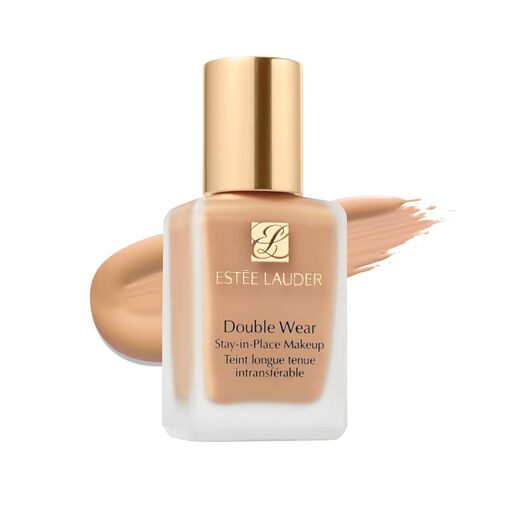
Estée Lauder Double Wear Stay-in-Place Foundation
Other Causes of Pilling (And How to Fix Them)
While formula incompatibility is the primary cause of pilling, several other factors can contribute:
1. Too much product Layering too many products creates more opportunity for incompatibility. Keep your routine streamlined, and give each layer time to absorb before applying the next.
2. Not letting products dry Rushing through your routine is a recipe for pilling. Wait 30-60 seconds between each skincare step and at least 2-3 minutes before applying foundation over primer.
3. Rubbing instead of patting Aggressive rubbing disturbs the layers beneath and encourages pilling. Use gentle patting or stippling motions when applying foundation.
4. Exfoliating skin cells Dead skin cells on the surface can mix with your products and create that balling effect. Regular exfoliation (2-3 times per week) keeps your canvas smooth.
5. Applying too much pressure with brushes Heavy-handed brush application can lift and disturb your primer layer. Use a light touch, or switch to a damp beauty sponge for gentler application.
Building a Pill-Free Routine
Here's a step-by-step approach to ensure smooth, seamless makeup application:
- Start with compatible skincare: Check that your moisturizer's base matches your primer and foundation
- Wait for absorption: Give your skincare 5-10 minutes to fully absorb
- Apply primer sparingly: A little goes a long way—focus on areas where you need the most smoothing
- Let primer set: Wait at least 2 minutes before foundation
- Use thin layers: Build coverage gradually rather than applying one thick layer
- Pat, don't rub: Use stippling or pressing motions to blend
- Set strategically: Use setting powder or spray to lock everything in place
When in Doubt, Test First
Before committing to a full face, do a patch test on your jawline. Apply your primer, wait a minute, then apply foundation. If you notice any separation, balling, or texture issues, you've likely got a compatibility problem.
Many beauty retailers offer samples, making it easier to test formula compatibility before purchasing full-size products. This small step can save you significant frustration—and money.
The Bottom Line
Foundation pilling isn't a reflection of your makeup skills—it's simple chemistry. By understanding the base ingredients in your products and following the golden rule of matching silicone with silicone and water with water, you can eliminate pilling from your routine entirely.
Take a few minutes to audit your current products. Check those ingredient lists, identify your bases, and make swaps where needed. Your future self—with a flawless, smooth foundation application—will thank you.