
Here's the thing about robot vacuums in 2026: the technology has matured to the point where even budget options can handle the basics competently. The question isn't really can this robot clean your floors—it's how it cleans them, and whether its particular blend of features and compromises aligns with your actual needs. Nowhere is this tension more apparent than in the ongoing battle between iRobot's Roomba line and the increasingly formidable offerings from DREAME.
The Tale of Two Companies
iRobot essentially invented the consumer robot vacuum category with the original Roomba back in 2002. They've spent two decades refining their approach, building out an ecosystem, and—this matters more than you might think—developing proprietary software that genuinely learns your home over time. The company was acquired by Amazon in 2022, which has injected both resources and, let's be honest, some concerns about data privacy into the equation.
DREAME, by contrast, emerged from Xiaomi's sprawling tech ecosystem in China and has been making aggressive moves in Western markets since around 2020. Their calling card? Specification sheets that make established players look almost quaint. We're talking stronger suction, longer battery life, and more features at lower price points. The classic disruptor playbook, executed with considerable competence.
Navigation and Mapping: Where the Rubber Meets the Road
Both brands now rely primarily on LiDAR-based navigation systems, which use spinning laser sensors to build detailed maps of your space. On paper, the technology is similar. In practice, the implementation differences become apparent within the first few cleaning cycles.
Roomba's iAdapt 3.0 (on their higher-end models) takes a methodical, almost conservative approach. The robot builds its map gradually, erring on the side of caution when encountering obstacles. It might take three or four runs before your Roomba truly knows your home, but once it does, the accuracy is remarkable. The robots also excel at what iRobot calls "reactive behavior"—adjusting cleaning patterns based on sensors that detect concentrated dirt, which triggers focused back-and-forth passes over particularly grimy areas.
DREAME's navigation feels faster and more confident out of the box. Their AI-powered obstacle avoidance (particularly on models with 3D-structured light sensors) handles common household debris—cables, socks, pet toys—with impressive accuracy. The map is usually complete after a single run. The tradeoff? Some users report that DREAME robots occasionally make aggressive assumptions about room boundaries that require manual correction in the app.
Suction Power: The Numbers Game
This is where DREAME's spec-sheet dominance becomes most apparent. Their flagship models now advertise suction power upwards of 7,000 Pa—numbers that would have been unthinkable in consumer robots just a few years ago. Current Roomba models, by comparison, typically top out around 2,000-2,500 Pa.
But here's the thing: raw suction isn't everything. iRobot has spent years optimizing their rubber dual-brush extractors to work efficiently at lower suction levels, pulling debris into the vacuum path more effectively than traditional bristle brushes. The result is cleaning performance that often matches higher-suction competitors while maintaining quieter operation and better battery life. DREAME's aggressive suction, meanwhile, does genuinely outperform on deep carpet cleaning and fine dust pickup—but at the cost of significantly more noise and faster battery drain.
The Self-Emptying Question
Both companies now offer self-emptying bases across their lineups, and frankly, if you're buying a robot vacuum in 2026, you should strongly consider this feature. The convenience factor is transformative—you go from emptying a dustbin after every run to replacing a bag every month or two.
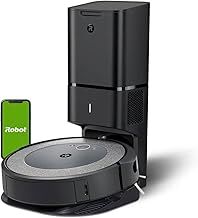
iRobot Roomba i3+ EVO
iRobot's Clean Base technology is proven and reliable, if not particularly exciting. The bags are proprietary (and not cheap), but the sealing system does an excellent job of keeping allergens contained. DREAME's self-emptying stations often include additional features—built-in mop washing, hot air drying, automatic solution dispensing—that make Roomba's bases feel almost spartan by comparison.
Software and Ecosystem: The Hidden Differentiator
This is where brand loyalty tends to cement itself, and where iRobot still maintains a meaningful edge. The iRobot Home app is mature, stable, and genuinely useful. Features like Imprint Smart Mapping allow for room-specific cleaning schedules, no-go zones, and cleaning preferences that persist across sessions. The integration with voice assistants feels polished rather than bolted-on.
DREAME's app has improved dramatically over the past two years, but it still occasionally feels like a translation from software designed for the Chinese market. Settings can be buried in non-intuitive places, and some users report inconsistencies between the app interface and actual robot behavior. These are solvable problems—software is infinitely updatable—but if app polish matters to you, Roomba currently wins this category.
The Mopping Situation
DREAME has leaned hard into hybrid vacuum-mop designs, and their execution is genuinely impressive. Their better models feature rotating mop pads that apply real scrubbing pressure, automatic mop lifting over carpets, and base stations that wash and dry the pads automatically.
iRobot, interestingly, has resisted the hybrid approach for their mainline Roomba products, instead offering the separate Braava line for mopping. Their reasoning—that a single robot can't optimize for both tasks—has become harder to defend as DREAME and others have demonstrably improved hybrid performance. If mopping capability is a priority for you, this is one area where DREAME's philosophy clearly wins.
Value and Reliability: The Long View
Here's where the comparison gets genuinely complicated. A flagship DREAME robot will typically cost 20-40% less than a comparable Roomba while offering more features on paper. For many buyers, that math is compelling enough to end the discussion.
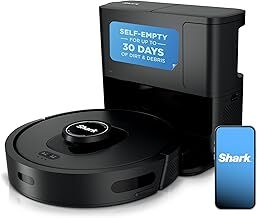
Shark AV2501S AI Ultra Robot Vacuum
But robot vacuums are not phones—you're not replacing them every two years. iRobot has a longer track record of supporting older devices with software updates, and their customer service infrastructure in North America and Europe is more established. Replacement parts for Roombas are widely available; DREAME's parts availability is improving but still lags behind. If you're thinking about a robot that needs to work reliably for five or more years, this matters.
The Verdict: It Depends (But Usefully So)
Choose Roomba if: You value software polish and ecosystem integration. You prefer quieter operation. You want proven long-term reliability and parts availability. You're already invested in Amazon's smart home ecosystem. You have mostly hard floors and low-pile carpets.
Choose DREAME if: You want maximum features per dollar. Mopping capability is a priority. You have deep carpets that benefit from high suction. You're comfortable being an early adopter with newer technology. You don't mind occasional app quirks in exchange for cutting-edge hardware.
Neither choice is wrong—they're just different philosophies executed at a high level. The robot vacuum wars have been good for consumers, driving down prices while pushing capabilities upward. Whichever direction you lean, you're getting a remarkably capable device that would have seemed like science fiction not so long ago.